





Most risk management tools are disconnected from strategy. StrategyWorks connects every risk, issue, and decision to the objective or initiative it threatens. When something escalates, it surfaces in context, not buried in a RAG spreadsheet sent the night before a board meeting.
When risk management is a separate process, it becomes a compliance exercise. Nobody reads a 200-line spreadsheet. Nobody escalates in time. And when something goes wrong, leadership is always surprised.
A standalone risk register is filled in quarterly, filed away, and ignored until the next update cycle. The discipline of logging risk has no connection to the discipline of managing strategy.
When a risk crystallises, the escalation path is an email chain. By the time leadership hears about it, the delivery team has been managing a crisis for three weeks in silence.
Risk registers track risks. They do not tell you that three of your highest-scoring risks all threaten the same strategic priority, or that one programme is carrying 80% of your portfolio risk.
Three types of strategic intelligence, each logged against the objective, programme, or project it relates to.
Something that could happen and would threaten a strategic outcome if it did. Logged against the objective or initiative at risk. Tracked by likelihood, impact, and owner.
Something that has already happened and is currently affecting delivery. Issues are flagged to the correct level of the hierarchy, so leadership sees them without waiting for a report.
Choices made (or that need to be made) that have strategic implications. Logged in context so they are traceable, not buried in meeting notes or email threads six months later.
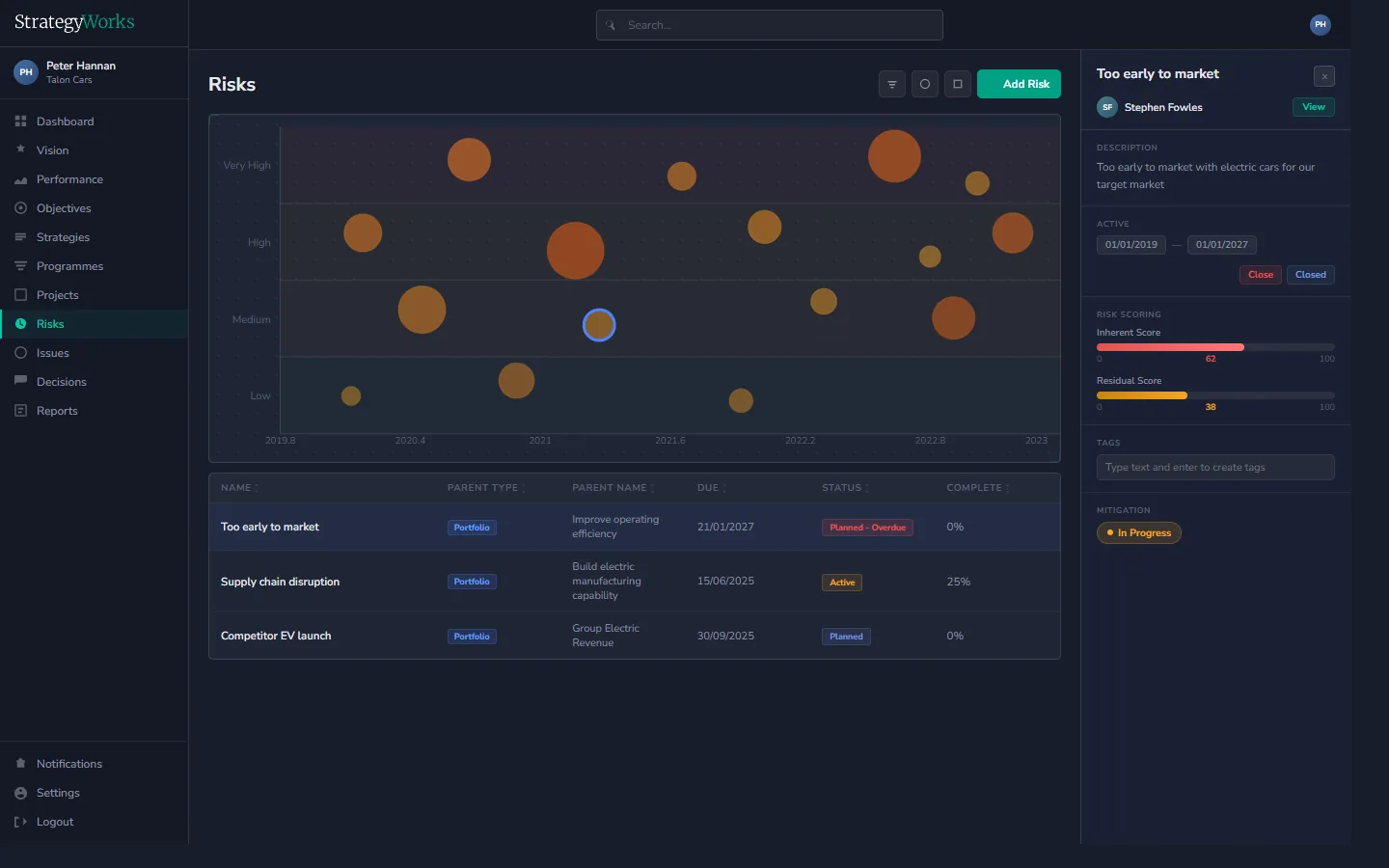
When a delivery lead logs a risk against a project, it is immediately visible at programme level, portfolio level, and in the strategic view. Leadership does not need to read a risk register to know where the pressure is. It is already in the dashboard they are looking at.
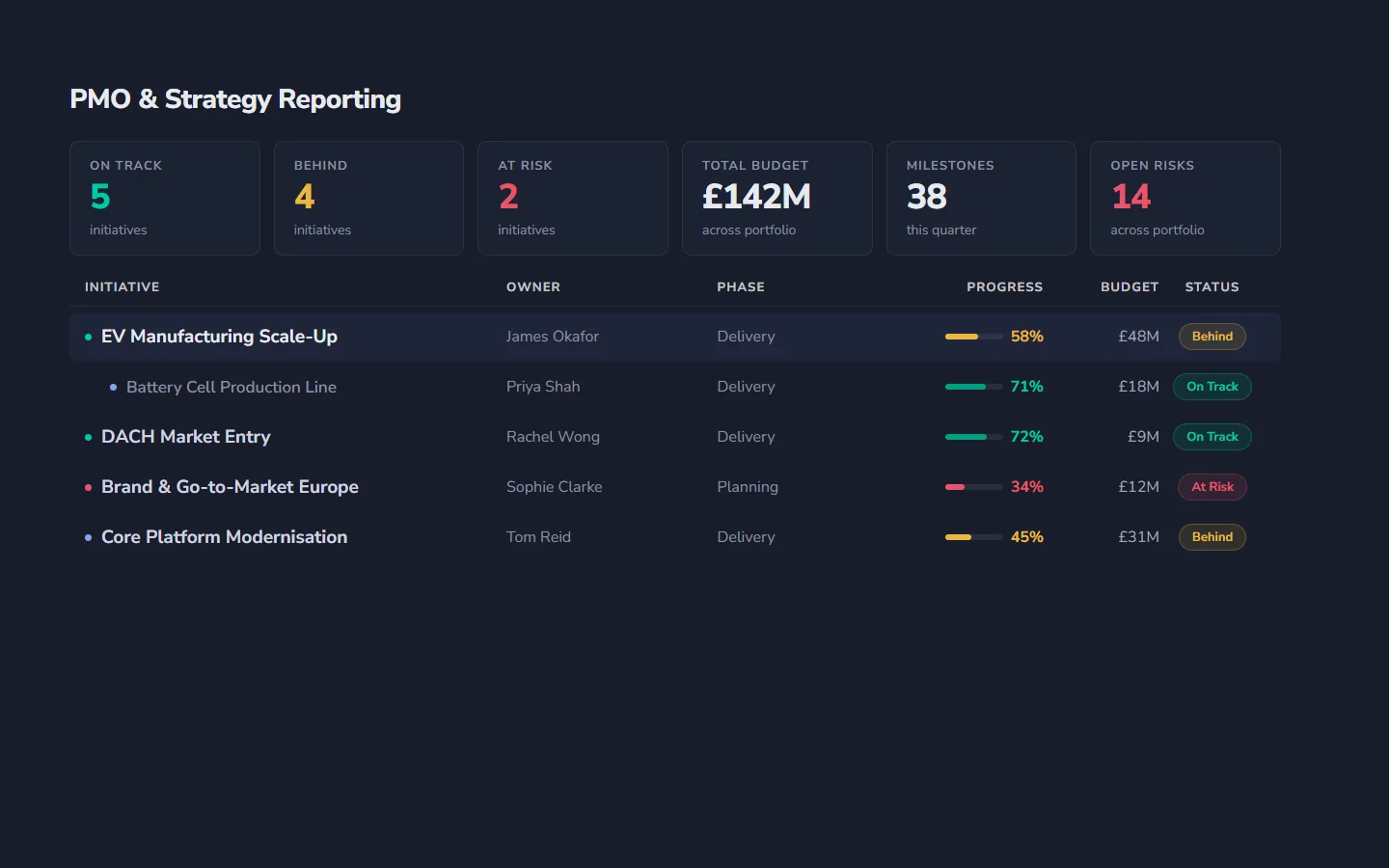
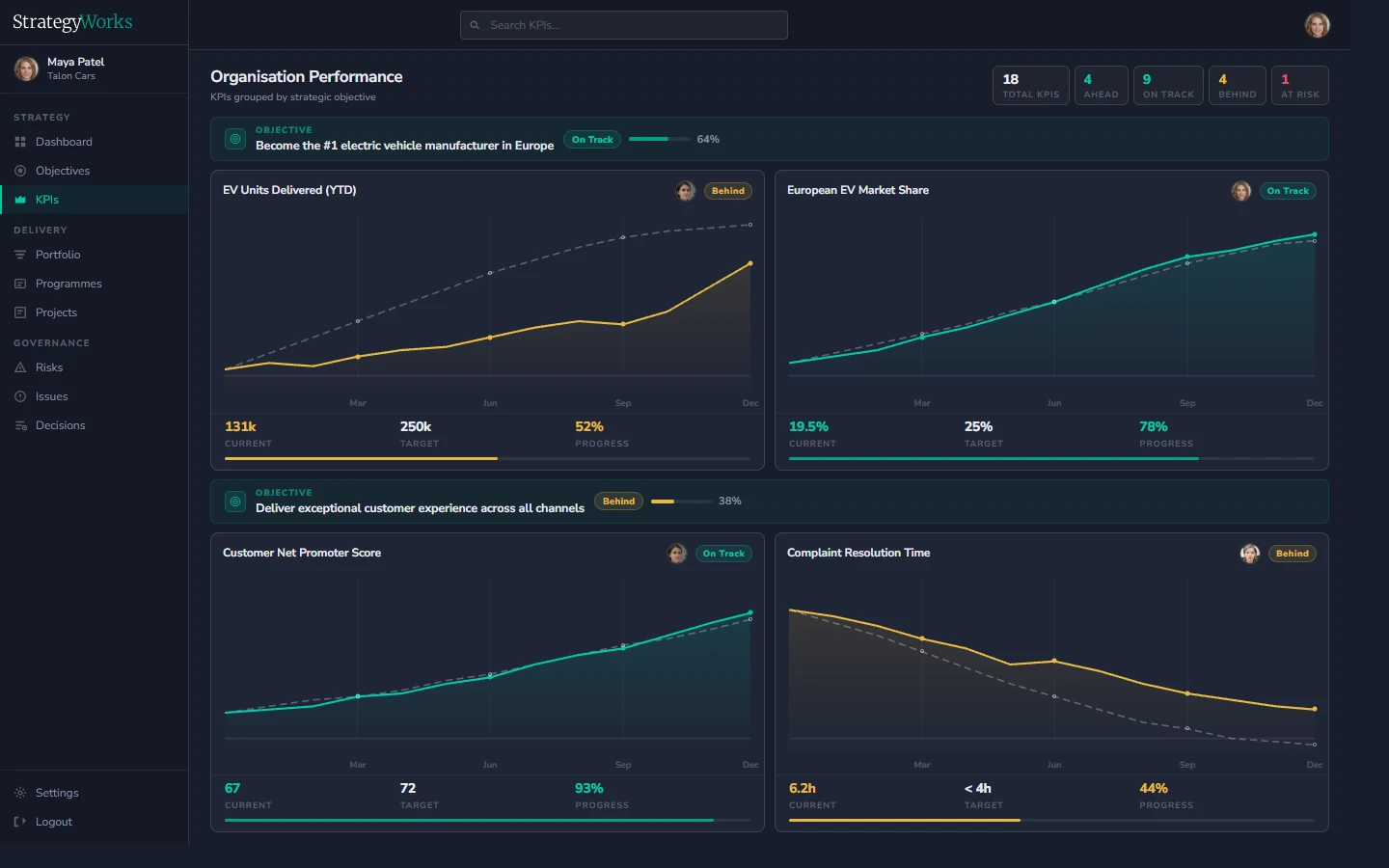
In most organisations, the link between risk and strategy is theoretical. In StrategyWorks it is structural. Every risk is tagged to the objective it threatens, so you can immediately see which strategic priorities carry the most risk, and make resourcing decisions accordingly.
The risk dashboard shows where risk is concentrated across your strategy and portfolio. Not a table of 200 rows: a view that shows the five risks that matter most to your strategic objectives, who owns them, and what the current mitigation status is.
You do not need to upgrade to use risk management in StrategyWorks. Strategic risks, issues, and decisions are part of the free OKR plan, connected to your strategy and OKRs from day one. The Platform plan extends this to portfolio, programme, and project level.
An "initiative" is any node in the delivery hierarchy connected to strategy: a strategic initiative, portfolio, programme or project. Sub-items are not counted.
Book a 30-minute demo and see how StrategyWorks integrates risk into your strategy hierarchy.